Our product-to-package audit
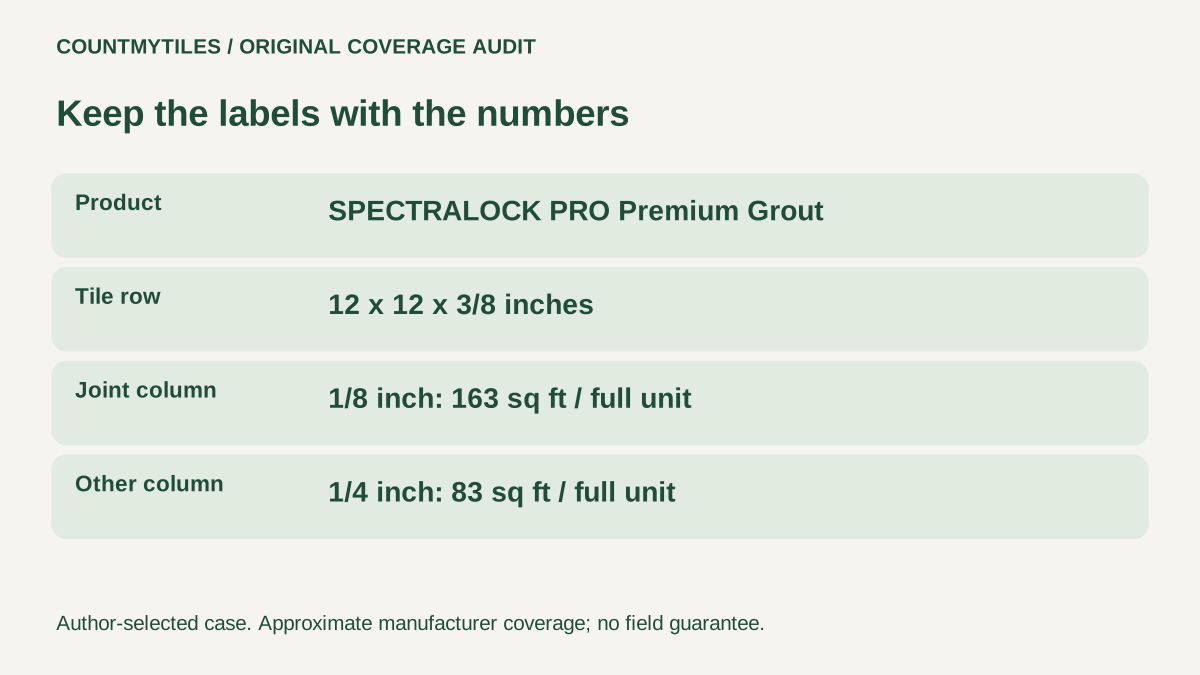
We chose a hypothetical installed area of 160 square feet to test a table-reading mistake. This is our authored case, not a customer job or a measured field trial. The source is LATICRETE's September 2026 color card, checked against the original PDF pixels. We selected SPECTRALOCK PRO Premium Grout in the epoxy section. Our tile row is 12 by 12 by 3/8 inches. The two joint columns are 1/8 inch and 1/4 inch. Keeping those labels together matters as much as copying the coverage number.
For that row, the selected epoxy table gives 163 square feet per full unit at the narrower joint and 83 at the wider joint. The denominator is one full unit. It is not one pound, one gallon, one individual component or a tile box. The printed metric coverage alongside each number is an alternative expression, not another amount to add. We keep the imperial row throughout this example rather than treating rounded millimeter labels as exact conversions.
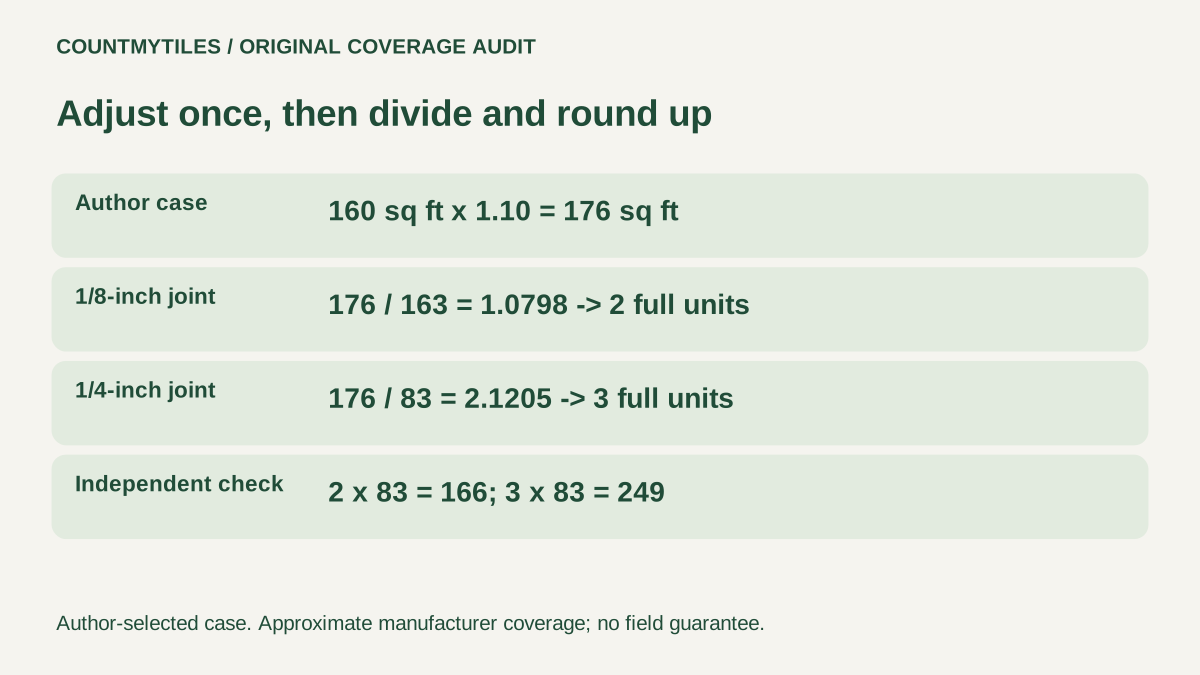
The source's coverage guideline adds ten percent for waste, spillage and cleanup. Applying that particular guideline to our selected case gives 160 × 1.10 = 176 square feet of planned coverage. We use it here as a source-specific input, not as a universal allowance for every grout or surface. The source discusses additional allowance for unglazed quarry tile separately; our case does not assume that situation or silently add it.
For the 1/8-inch joint, divide 176 by 163. The result is approximately 1.0798 full units, so the complete-package calculation rounds up to two. Check it without trusting the decimal display: one full unit's approximate 163 square feet falls below 176, while two total 326. For the 1/4-inch joint, 176 divided by 83 is approximately 2.1205. Two units total 166 square feet, still ten below our planned coverage; three total 249. The modeled result is three full units.
| Joint | Coverage / full unit | Division | Complete units |
|---|---|---|---|
| 1/8 inch | 163 sq ft | 176 ÷ 163 ≈ 1.0798 | 2 |
| 1/4 inch | 83 sq ft | 176 ÷ 83 ≈ 2.1205 | 3 |
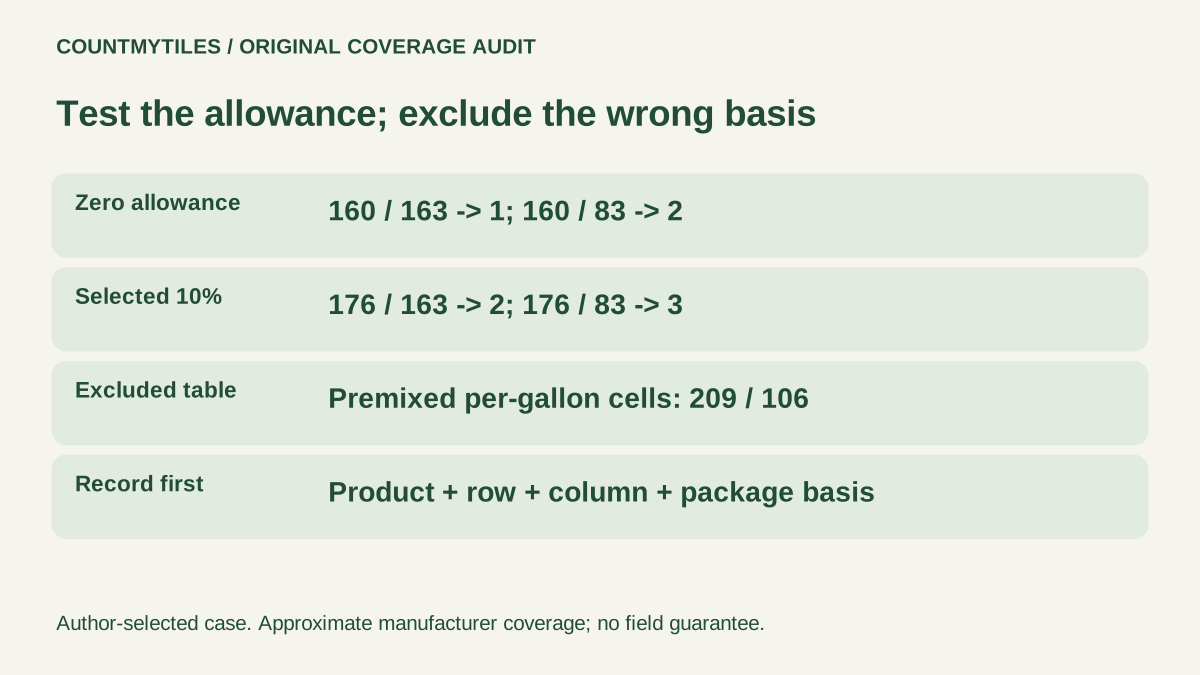
Now isolate the allowance. Set it to zero while retaining our 160-square-foot installed area. At the narrower joint, 160 ÷ 163 is below one and rounds to one full unit. At the wider joint, 160 ÷ 83 is about 1.9277 and rounds to two. Adding our source-specific ten percent crosses a package boundary in both cases. This explains the change without changing the tile row, product or area measured on the floor.
A nearby table can produce a plausible but mismatched answer. The separate premixed section prints 209 and 106 square feet for the corresponding row and columns, on a per-gallon-pail basis. Those cells belong to a different product group. Substituting them into our full-unit example would yield one and two after rounding. We exclude them: a mathematically tidy answer cannot repair a product or package mismatch. This is a table-selection test, not a comparison of product performance.
To reproduce our audit, load the sourced example, calculate, and change only coverage to 83. Then set allowance to zero and compare the results. The worksheet clears its previous result whenever an input changes, so a displayed package count cannot silently refer to the earlier column. Copying the example records its selected product and dimensions; editing it changes the label to your entered package basis. Record the new product and table labels alongside your own calculation.
Read the coverage basis before entering a number
Locate the manufacturer's table for the actual product and package. Confirm tile length, width and thickness, joint width, and the table's coverage unit. Do not use a generic grout density to turn this package calculation into a weight estimate. If your dimensions are absent, this worksheet supplies no interpolated product yield: obtain the appropriate coverage from the manufacturer and enter it explicitly.
Formula, rounding and limits
Adjusted area = installed area × (1 + allowance percent ÷ 100). Complete packages = round up(adjusted area ÷ coverage per package). The worksheet accepts four decimal places and calculates package rounding with exact decimal arithmetic. The displayed division is rounded to four decimals; an integer package result is calculated before that display rounding. Source coverage remains approximate and varies with conditions, actual tile dimensions and installed joints. A larger modeled coverage total does not guarantee a particular on-site yield.
Questions answered
Can I use tile-ordering waste as the grout allowance?
Use the allowance appropriate to the selected grout source or your explicit estimate. Extra tiles and grout loss are separate quantities. This worksheet does not import the tile calculator's waste setting.
Does two full units mean two gallons or two bags?
No. It means two of the complete units identified by the coverage table. Verify the actual package contents and purchasing configuration. This calculation does not split or recombine components.
What if my table uses square meters?
Use matching area units before calculating. This worksheet is labeled in square feet. Do not enter a square-meter coverage number beneath a square-foot area.
Why does changing one joint column change a whole package?
A lower coverage per package increases the quotient. Rounding up then changes the complete-unit count when the required coverage exceeds another package boundary. Our worked case shows the same floor under two identified columns.
Original sources and method record
Manufacturer values were verified October 9, 2026 and their product page rechecked October 11. See the official product page, color card DS-254.3-EN-SP-0926 (PDF page 2, upper epoxy panel; page 6 coverage guidelines), and datasheet DS-681-0926 for the package record. CountMyTiles authored the case, calculations, diagrams and questions on October 11. Questions are explanatory and self-authored, not customer quotations. We reviewed Calculator.net's tile page, TilePro's grout guide and Omni's grout page; coverage formulas already exist elsewhere. Our contribution is the reproducible product, row, column and package audit. For measured area, use our feet-and-inches worksheet.