Our two-rectangle measurement audit
We created two rectangular patches to test a specific recording mistake: treating the inches written after the feet as digits after a decimal point. These are author-selected dimensions, not a customer's room or a survey. R1 measures 8 feet 7 inches by 6 feet 11 inches. R2 measures 3 feet 4 inches by 2 feet 9 inches. We assume the patches do not overlap, have no untiled holes, and use the same tile material. The point of the example is to retain the measurement note all the way through the area calculation.
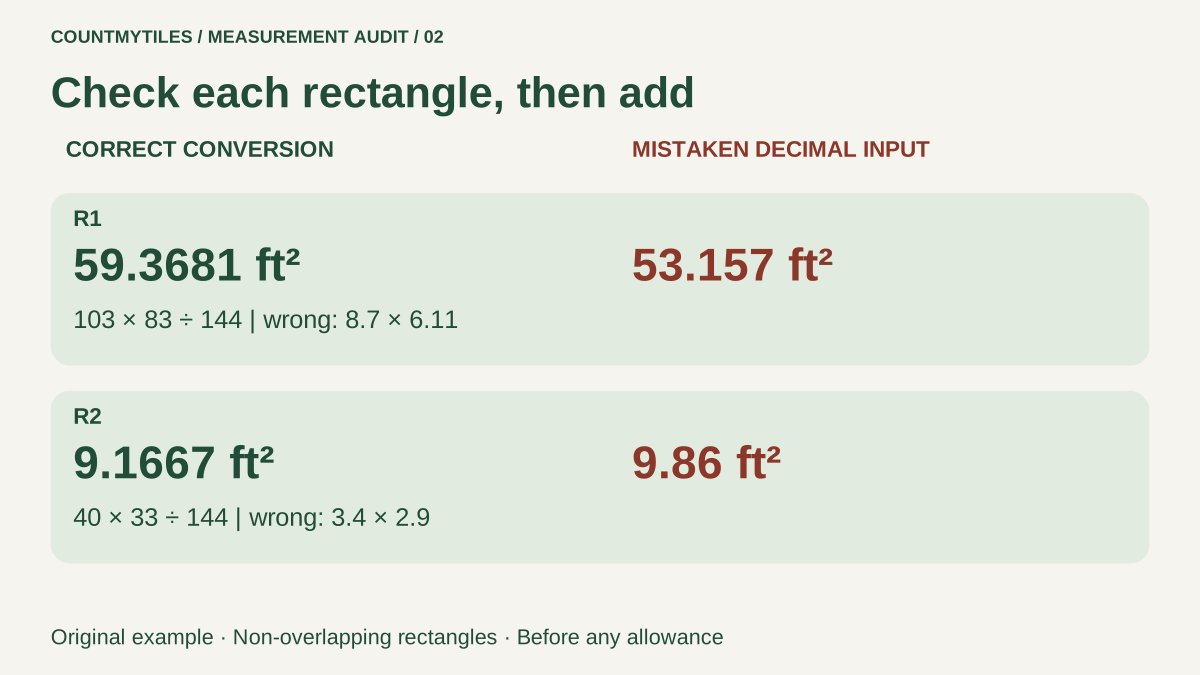
Start with R1's long side. Eight feet contributes 96 inches; the extra seven makes 103 inches. Its other side contributes 72 plus 11, or 83 inches. Multiplying those two whole-inch lengths gives 8,549 square inches. Divide by 144, because a square foot is a 12 by 12 inch square. The exact R1 area is therefore 8,549/144 square feet, or about 59.3681. Nothing in that step involves reading 8 feet 7 inches as 8.7 feet.
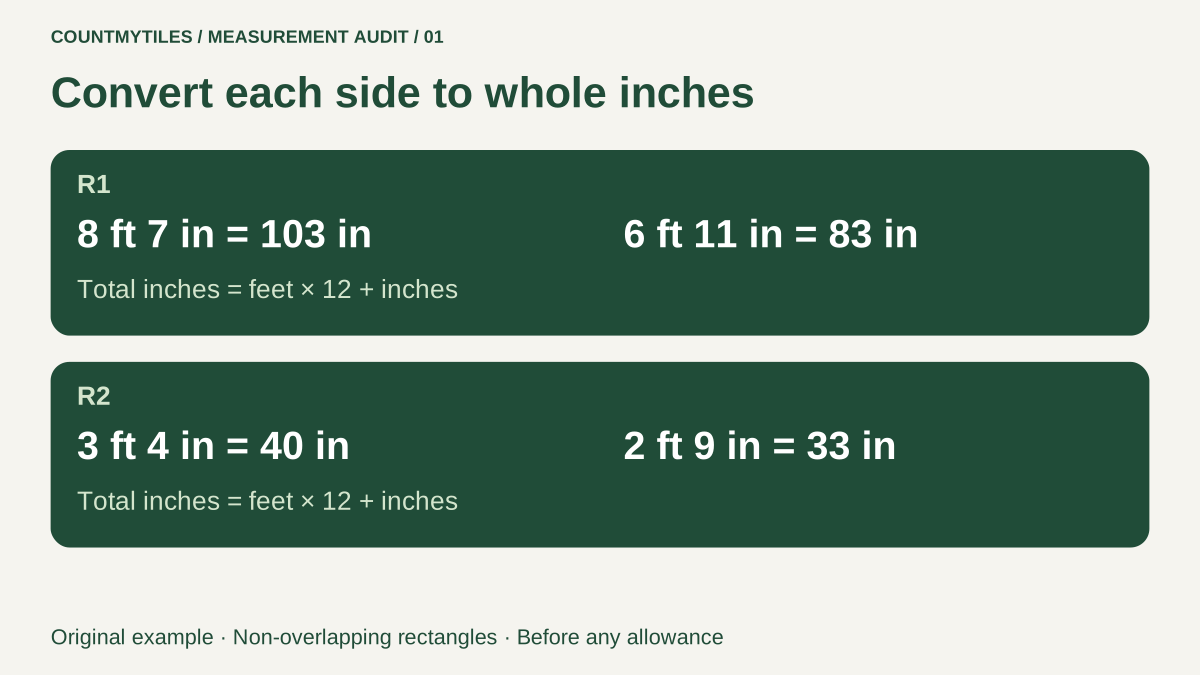
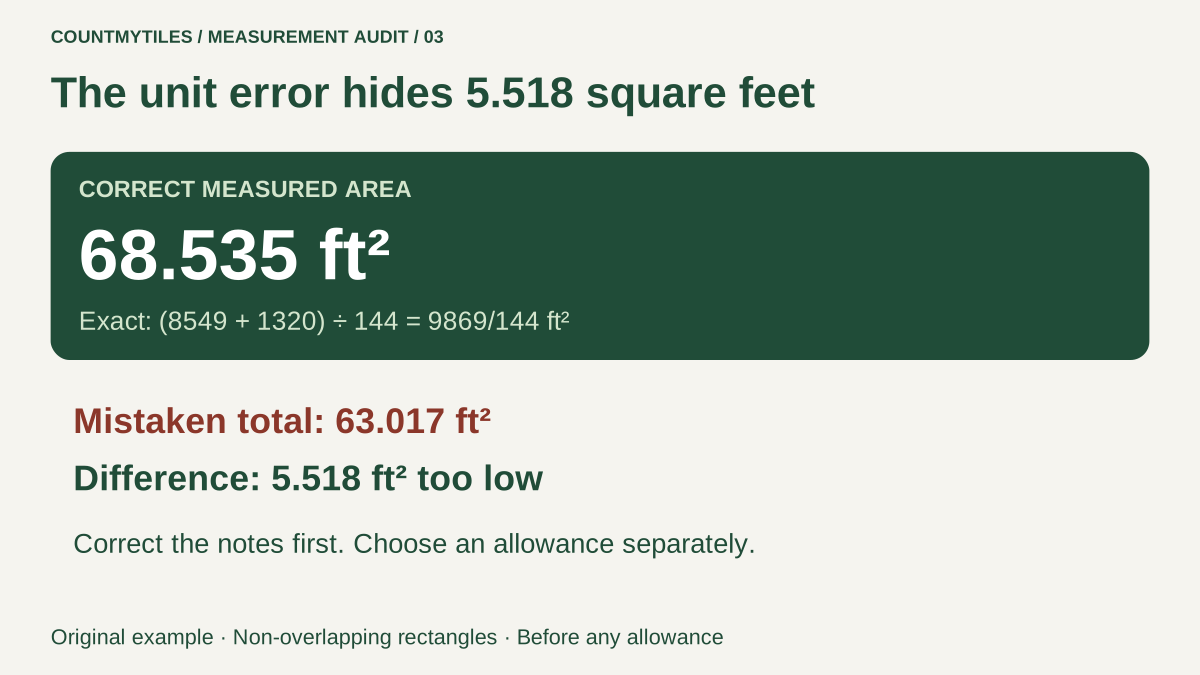
For R2, three feet and four inches is 40 inches. Two feet and nine inches is 33 inches. Its area is 1,320 square inches, which is 1,320/144 square feet, or about 9.1667. Add the square-inch subtotals first: 8,549 plus 1,320 equals 9,869. Dividing this total once gives 9,869/144, or 68.5347222 square feet. The large answer above displays that result rounded to three decimal places. The exact fraction stays visible below it so the display does not become a new measurement.
Now follow the deliberately mistaken route. A person transcribing the same notes might enter 8.7 and 6.11 for R1, then 3.4 and 2.9 for R2. That route produces 53.157 and 9.86 square feet, totaling 63.017. Notice that the second patch is overestimated while the first is underestimated. A single total can hide opposite mistakes. The R1 loss is about 6.2111 square feet; the R2 excess is about 0.6933. Their net effect is a shortage of about 5.5177 square feet.
Check the transcription without calculating any area. The mistaken 8.7-foot entry means 8 feet and 8.4 inches. The 6.11-foot entry means 6 feet and 1.32 inches. Neither matches its original note. Similarly, 3.4 feet is 3 feet and 4.8 inches, and 2.9 feet is 2 feet and 10.8 inches. Multiplying an entry cannot repair that entry's units. These reverse conversions expose the mistake before the two area errors have a chance to cancel.
Our final reconciliation is 68.5347222 minus 63.017, or 5.5177222 square feet missing from the mistaken total. This is a comparison of two calculation paths for our chosen notes. It does not establish a standard shortage, a waste allowance, or a safe amount to order. Copy the corrected area into an ordering calculator only after confirming the material and the boundaries of each patch. Keep the original notes and this ledger together; a rounded total by itself cannot show where the inches went.
The conversion used by this tile sq ft calculator
For each side, total inches = feet × 12 + inches. For each rectangle, area in square feet = length in total inches × width in total inches ÷ 144. Add the areas of separate tiled patches. Do not multiply a length in inches by a width in feet unless you also keep track of the resulting mixed units and convert them.
The unit relationship is exact; your measurements may not be. A more detailed display cannot remove uncertainty in a tape reading, an uneven wall, or a boundary you have not measured. This worksheet accepts whole feet and whole inches to match the notes in the worked example. For fractional-inch notes, convert each full length carefully using another appropriate input method; do not round the note silently to make it fit these fields.
What the answer includes
The answer is measured rectangular surface area. It includes neither a chosen waste allowance nor tile sizes, grout joints, box capacity or price. It assumes the two patches do not overlap. Set both dimensions of R2 to zero to omit that patch. Any nonzero patch needs two positive dimensions. If patches overlap, subtract the overlap separately rather than counting it twice.
Once the measurement ledger is correct, use our tile calculator in area-only mode with US units. Enter the square-foot area, the actual tile dimensions, the allowance you choose and the supplier's box capacity. This link does not transfer or round your result automatically. For shower walls and recessed openings, the shower surface worksheet covers a different measurement problem. This page focuses only on feet-and-inches transcription.
Questions answered
Is 8 feet 7 inches the same as 8.7 feet?
No. Seven inches is 7/12 of a foot. The length is 8 + 7/12 feet, approximately 8.583333 feet. An entry of 8.7 feet instead includes 8.4 inches after the eight feet.
Do I divide by 12 or 144 to get square feet?
Divide a length in inches by 12 to get feet. Divide an area in square inches by 144 to get square feet. There are twelve inches along each side of a one-square-foot square.
Can I fix an incorrect area by adding extra waste?
Correct the measurements first. An allowance is applied to the area you feed the next calculator. Using it to hide a unit mistake loses the connection to the original notes and can still produce the wrong order.
Should I round each rectangle before adding?
Retain the calculation precision until the total is formed, then round for display. Our example adds the integer square-inch areas before dividing by 144. Ordering quantities require their own rounding rules after a product and packaging are selected.
Does 68.535 square feet tell me how many tiles to buy?
It gives the measured area for this example. The purchase also depends on the actual product, layout, allowance and full-box requirement. Keep those choices explicit in the ordering step.
Method and source record
CountMyTiles authored these notes, arithmetic checks, diagrams and questions on October 5, 2026. The questions are explanatory examples rather than quoted customer testimony. NIST's length reference gives the exact inch definition, and its conversion guide gives the international-foot relationship. Their ratio confirms twelve inches per foot. We re-read Calculator.net's square-footage page to compare its shape and unit structure; no competitor text is reproduced.