Our 17-tile shelf audit
We authored this inventory record to test a question that comes after a quantity estimate: which existing tiles can actually reduce the new order? The requirement is an entered 88 whole tiles. It is a fixed input throughout this example, not a measurement or an installation recommendation. We choose a hypothetical package of nine tiles. The package count describes this example only; it is not a real product specification.
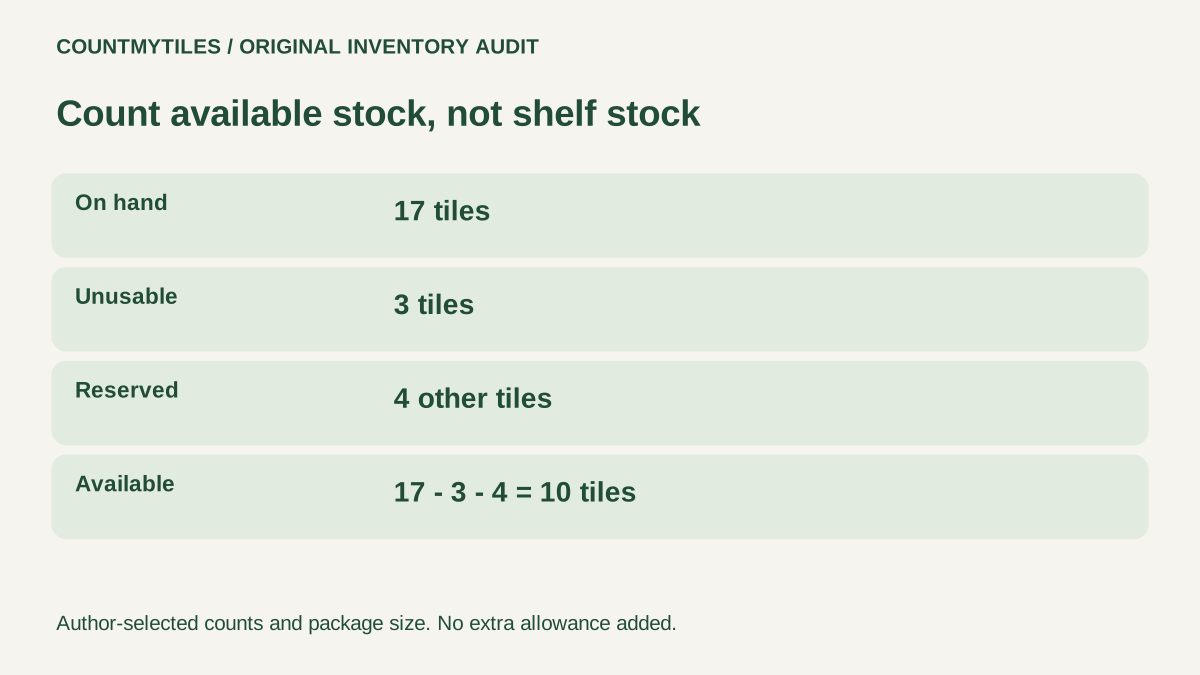
Start with seventeen tiles physically on the shelf. Assign each tile to exactly one group. Three are unusable for our plan. Four other, usable tiles are committed elsewhere. The remaining ten are available for this requirement. The arithmetic is 17 − 3 − 4 = 10. Reserved tiles are not damaged tiles counted a second time. If the same tile appeared in both groups, this subtraction would misstate the inventory.
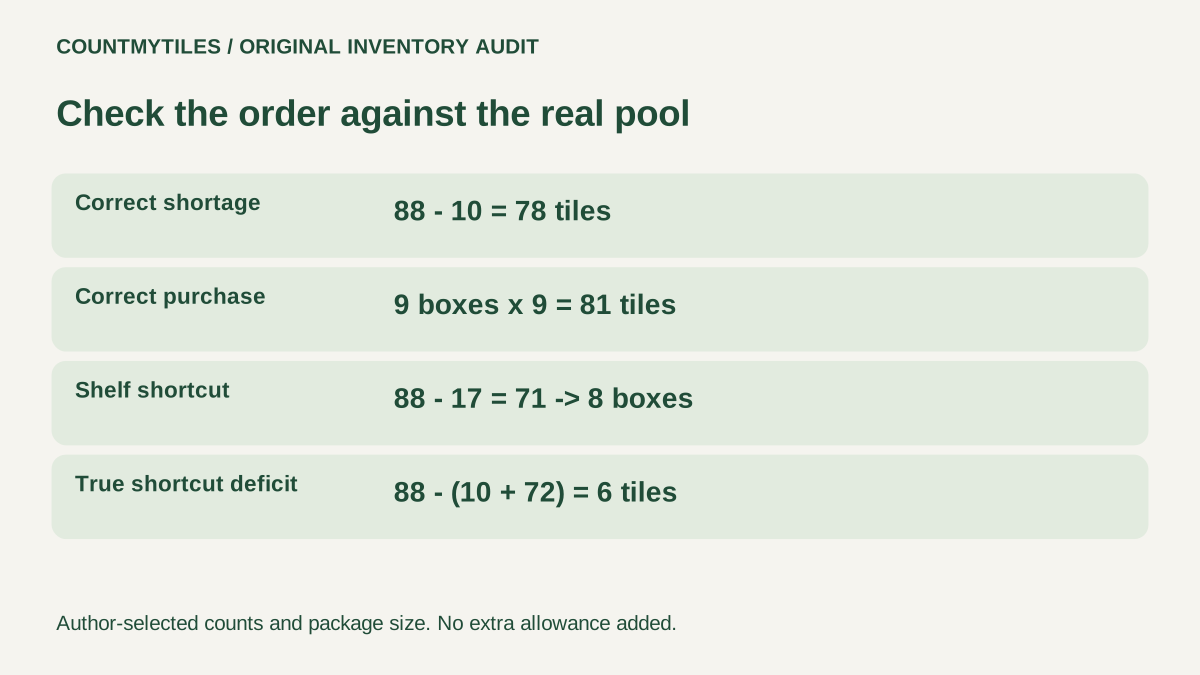
Next, apply only the ten available tiles to the requirement. Eighty-eight minus ten leaves a shortage of seventy-eight. Eight boxes would contain seventy-two tiles, which is six too few. Nine boxes contain eighty-one, which covers the shortage with three tiles left over. Check the balance without a percentage: ten existing available tiles plus eighty-one new tiles equals ninety-one. After allocating eighty-eight, the available balance is three.
A tempting shortcut subtracts all seventeen tiles on the shelf. That gives a shortage of seventy-one and an order of eight boxes. But the order adds only seventy-two genuinely available tiles to the ten we already identified. The usable pool would be eighty-two, six below the requirement. The seven incorrectly credited tiles do not translate into seven missing tiles here, because whole-box rounding also changes. Record both ledgers instead of assuming the error size.
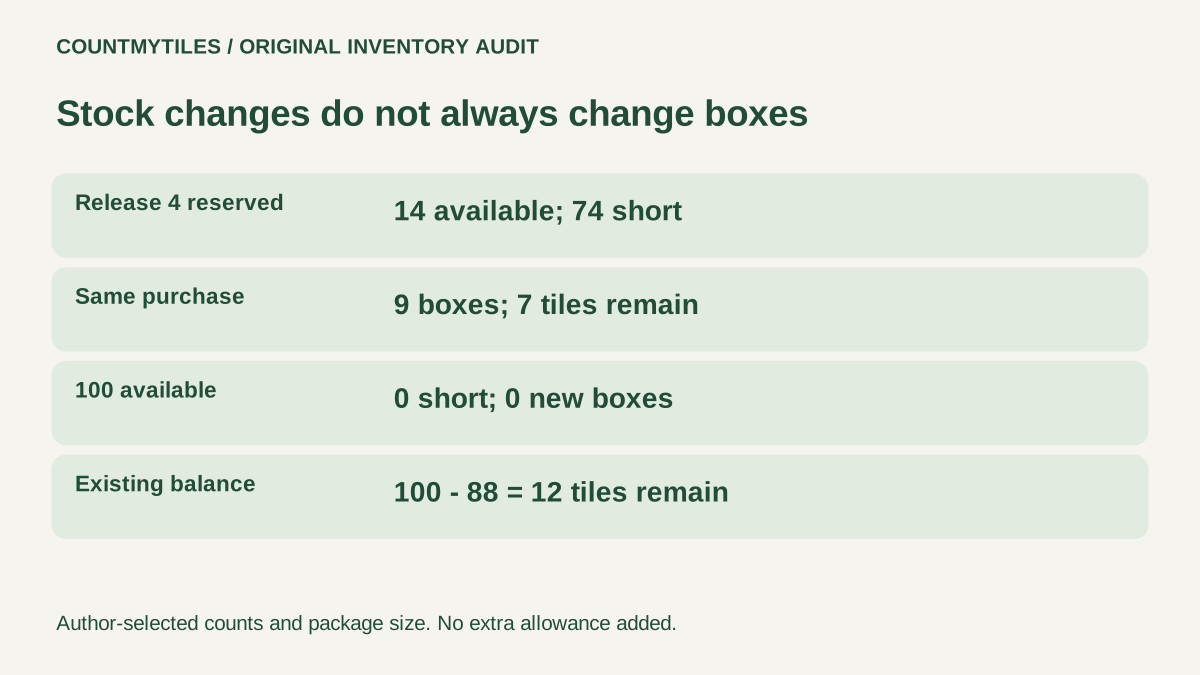
Now change one fact. Suppose the four reserved tiles are released for this plan, and all other entries remain fixed. Available stock becomes fourteen. The shortage falls to seventy-four. Nine boxes are still needed, so the new purchase stays eighty-one tiles, while the available balance rises to seven. Releasing stock can change the balance without changing the box count. This is a stock-allocation result, not a reason to adjust the required count.
Test the other boundary: one hundred verified available tiles, no unusable tiles, no reservations, and a requirement of eighty-eight. The shortage is zero and the order is zero boxes. Twelve available tiles remain. The worksheet never produces a negative order or calls those twelve tiles new-box rounding. New-box rounding is zero because nothing was bought. Keeping those two quantities separate is useful when inventory already covers the job.
To repeat our audit, load the example and inspect all five outputs. Change reservations to zero and calculate again. Then enter damaged and reserved counts whose combined total exceeds the shelf count; the worksheet rejects that impossible partition. Any input change clears the previous result and disables copying until the current entries calculate successfully. Your copied record includes every input so a later reader can reconstruct the result.
Get the requirement before auditing stock
Use the main tile calculator for a measured quantity and a chosen allowance, or enter a count from your own plan. Bring that final requirement here once. This worksheet does not recalculate layout, determine cut reuse, or add another allowance. A shelf item should enter this record only after you verify that it is suitable for this particular material group and plan. The calculator cannot inspect it.
Questions answered
Can I subtract tiles reserved for a different room?
Only after you actually release that allocation. In our case, releasing four tiles changes available stock from ten to fourteen. It does not change the requirement.
Can two different materials share this inventory total?
Keep separate records for material groups that cannot substitute for one another. A numerical surplus in one group does not fill a shortage in another. This tool accepts one group per calculation.
Does the three-tile balance mean the allowance was three tiles?
No. In our first case it is the difference between the new full-box purchase and the shortage. Any allowance belongs in the entered requirement and is not derived here.
Method record and limits
CountMyTiles authored the cases, questions, diagrams and arithmetic on October 14, 2026. All stock counts and package sizes are chosen examples. Available = on hand − unusable − reserved. Shortage = max(0, required − available). New boxes = ceiling(shortage ÷ tiles per box). Available balance = available + purchased − required. These equations reconcile counts; they do not certify material compatibility or installation quality.
The fixed comparison pages reviewed for this series discuss measurements, allowances, quantities and packaging. This page contributes the specific inventory partition, the false eight-box order and the release-of-reservation experiment. The gap claim is limited to that worked record in the reviewed pages. See the separate grid-versus-area case for a geometric quantity question.