Our three-area minimum-charge audit
We authored this example to separate a quoted rate from the amount billed on a small job. All values are hypothetical: an eight-dollar labor rate per installed square foot and a six-hundred-dollar minimum total labor charge. They are not a US average, a supplier offer or a claim about what an installer should charge. We keep both quote terms fixed and vary only the installed area: fifty, seventy-five and one hundred square feet.
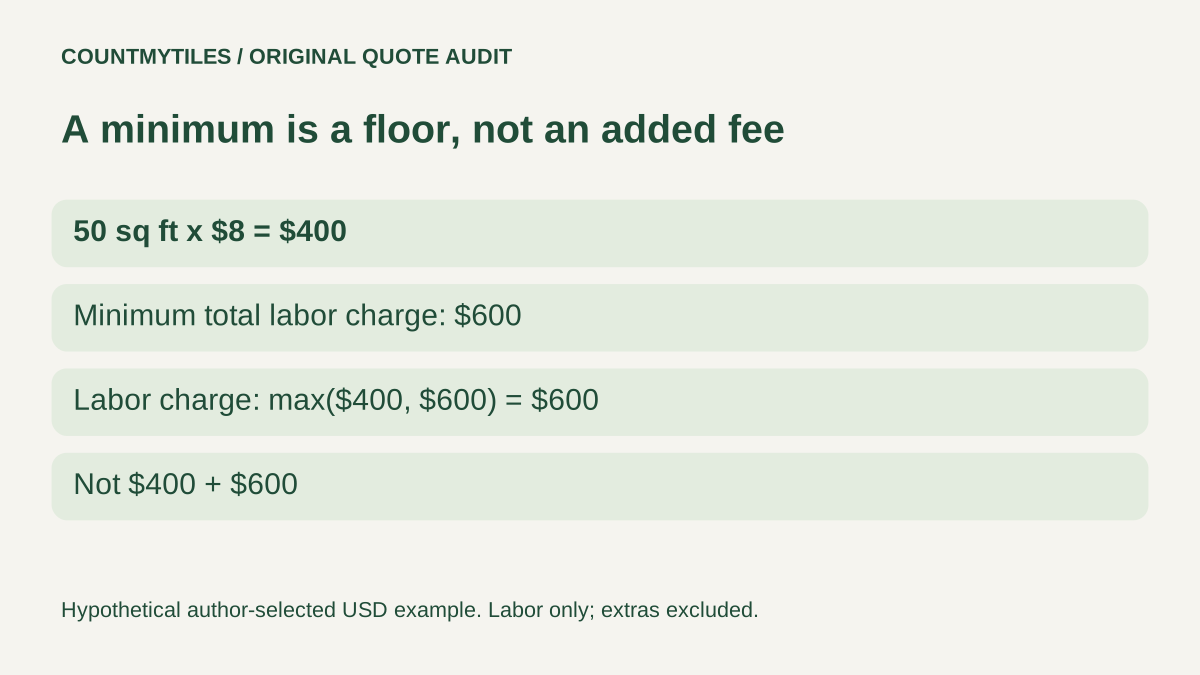
At fifty square feet, multiplying fifty by eight gives four hundred dollars. The minimum is six hundred dollars, so the modeled labor charge is six hundred. The two-hundred-dollar difference is a top-up to the minimum. Adding the minimum to the four-hundred-dollar subtotal would produce one thousand dollars, which would describe different quote terms. Our worksheet does not use that additive interpretation.
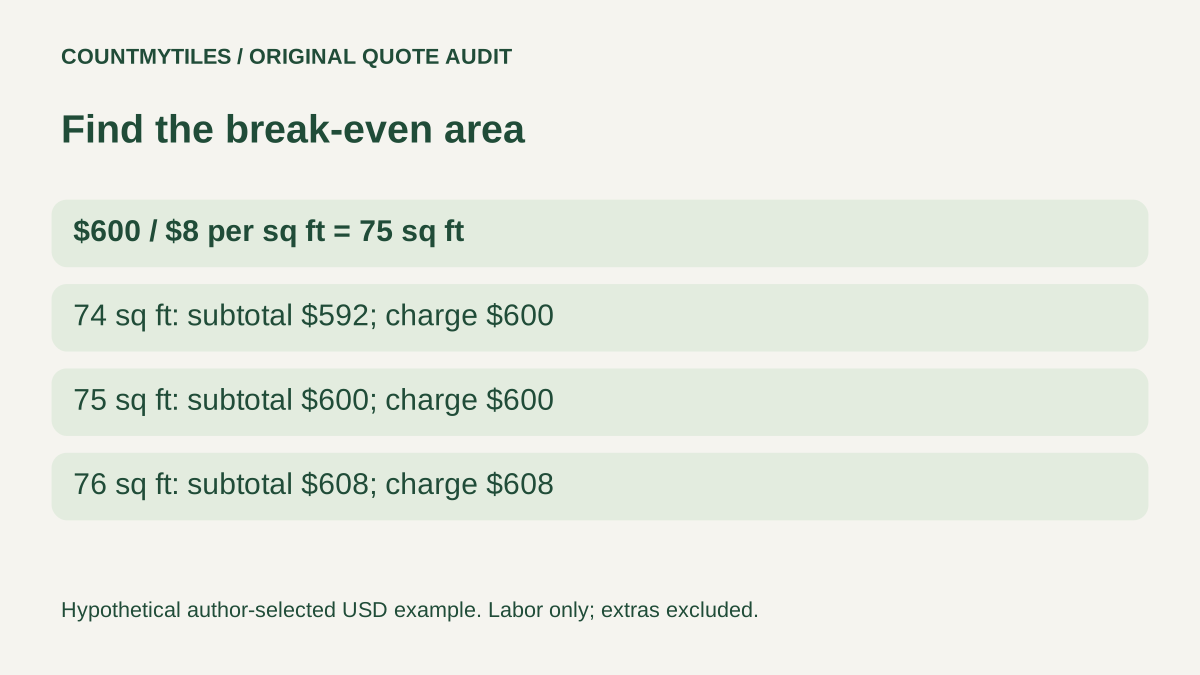
Find the boundary by dividing six hundred by eight. The result is seventy-five square feet. At that exact area, the area-based subtotal and the minimum both equal six hundred dollars. There is no extra charge merely because the two terms are equal. Just below the boundary, at seventy-four square feet, the subtotal is five hundred ninety-two dollars and the minimum still sets a six-hundred-dollar charge. Just above it, at seventy-six square feet, the area-based amount is six hundred eight dollars and that amount sets the charge.
| Installed area | Rate subtotal | Labor charge | Effective rate |
|---|---|---|---|
| 50 sq ft | $400 | $600 | $12 / sq ft |
| 75 sq ft | $600 | $600 | $8 / sq ft |
| 100 sq ft | $800 | $800 | $8 / sq ft |
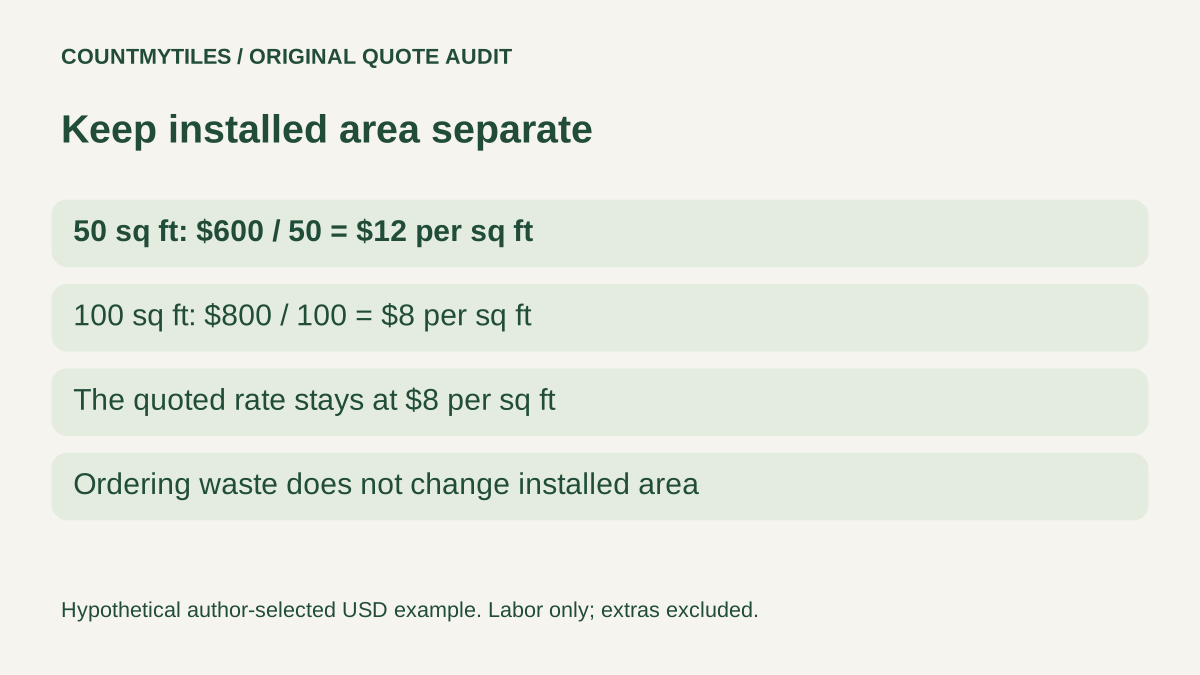
At one hundred square feet, the subtotal is eight hundred dollars, already higher than the minimum. The minimum adds nothing. Dividing the charge by the installed area gives an effective eight-dollar rate. At fifty square feet the same operation gives twelve dollars per square foot. The entered rate never changed; the higher effective figure comes entirely from spreading the minimum across a smaller area. Comparing only an effective rate can therefore conceal the quote structure.
Now test an ordering mistake separately. Suppose the fifty-square-foot job has a user-selected ten-percent material allowance. That would be fifty-five square feet of material coverage before packaging decisions, but the measured installed area remains fifty. Our labor worksheet uses fifty. If a real quote deliberately bills purchased quantity rather than installed area, record that term and use the quantity it specifies. Do not silently transfer the material allowance to a labor calculation.
The audit is reproducible: load our example, change the area to seventy-five, then to one hundred. Check the subtotal, charge, top-up and boundary each time. A quote without a minimum can be modeled by entering zero for the minimum. A zero labor rate with a positive minimum produces that minimum as the charge, but there is no finite break-even area. This is an arithmetic edge case, not a suggested commercial quote.
Formula and rounding
Area-based labor subtotal = installed square feet × quoted USD rate per square foot, rounded to cents. Labor charge = max(subtotal, minimum total labor charge). Minimum top-up = charge − subtotal. Effective labor price = charge ÷ installed area. Break-even area = minimum ÷ rate when the rate is greater than zero. The boundary describes the unrounded relationship; very small changes near it may display the same cent-rounded subtotal.
Match the worksheet to the agreement
Read the labor line before entering values. If the quote says a fixed fee is added to the labor subtotal, this maximum model does not fit it. A flat total with no unit rate also cannot be reconstructed from a made-up rate. Ask the quote provider which measured quantity is billable and whether the minimum replaces a lower subtotal. Keep removal, preparation, materials, travel and tax separate unless the quote expressly includes them; this worksheet supplies none of those amounts.
Questions answered
Does a minimum mean I add it to the rate subtotal?
Only if the quote actually defines an added fee. In this worksheet the minimum is a floor on the total labor charge, so the charge is the larger amount. It is not their sum.
Should labor include tile waste?
Use the billable quantity defined by your quote. This worksheet labels its area as installed surface area, without a material allowance. Our tile calculator handles tile quantities and whole boxes separately.
Why is my effective price higher than the entered rate?
When the minimum controls the total, dividing it by a smaller installed area produces a higher effective rate. The worked example shows that difference without changing the quoted rate.
How do I compare a second quote?
Record its actual rate and minimum and calculate it separately for the same installed area. Compare included work as well as the arithmetic. A lower modeled labor charge does not establish identical scope or quality.
Method and source record
CountMyTiles authored the cases, diagrams and explanatory questions on October 8, 2026. Questions are self-authored, not customer quotations. The method is an explicit mathematical model of user-entered terms; no market-price source is implied. We compared the structure of Calculator.net's tile page, TilePro's floor page and Omni's flooring page. The specific audit above is our own work; it is not a claim that these sites never discuss minimum charges. To verify measured area first, use the feet-and-inches area worksheet.